Walk through any Jakarta neighborhood--Menteng, Kebayoran Baru, Kelapa Gading--and you will see them: door frames swollen at the base, fine brown lines climbing foundation walls, tiny pinprick holes in skirting boards. Many homeowners think it's just wear and tear. It's not. This is proof that a colony of subterranean termites has already invaded the structure and are eating all day long and seven days a week. The continuous humidity of Jakarta as well as the accidental enticement by modern methods of construction are the primary factors. To safeguard a Jakarta home, it is essential to eliminate all pest control methods imported from the outside and employ strategies specifically designed for the local species, soil and climate.
1. The Door Frame and Window Viral
The termites from Jakarta don't enter concrete slabs. They appear close to the top of the person's height where wood meets concrete. About half of documented attacks involve wooden frames sunk in brick walls, door jambs or window sills. Companies that employ injection rods or drills to attack the slab of floor, are fighting the wrong battle. The real fight is at waist level, where water accumulates on glass and then gets absorbed into untreated wood.
2. Four Species, One City, Different Rules
Jakarta has at least 4 distinct species of subterranean Termite. The different species of termites differ in their behavior. Coptotermes Gestroi is an aggressive structural invader. Microtermes Insperatus is more destructive, but it is also more dominant in numbers. Macrotermes gilvus builds visible mounds in gardens. Coptotermes curvignathus favors living trees, but will migrate to homes when wood isn't readily available. Pest control professionals who are unable to tell the different between them will be unable to choose the correct bait.
3. The Six-Week Truth
There is no legitimate way to eliminate colony overnight. Chlorfluazuron requires 6-8 weeks to circulate around the colony through trophallaxis (the sharing of food among termites). Pest control firms that advertise 24/7 eradication utilize contact poisons to kill the foragers. The reproductive nucleus remains unaffected.
4. Above-Ground Stations Are Changing Everything
A perimeter station is useful to monitor, but is useless to stop an infestation that already took place within the structure. Above-ground stations--small bait cartridges locked directly on mud tubes--push toxicant into the colony's highway. Jakarta exterminators don't sell treatments if they don't have above-ground units.
5. The Soil Moisture Trap
Jakarta's silty-clay soils retain moisture. Termites prefer soils with water content of more than 22 percent. If you apply chemical termiticides without first assessing the effluent from the downspout and overspray of the irrigation or evaluating drainage issues you're injecting expensive poison into the environment that termites love.
6. Pine Stake Forensics
Before they recommend treatment, experienced exterminators in Jakarta will bury Pinus merkusii stakes which are not treated in the area around them. After thirty days, the exterminators dig up the stakes, and weigh them. Weight loss exceeding thirty percent indicates high pressure foraging and justifies intervention. This isn't a guesswork; it's calibrated entomology that is available to any competent service provider.
7. Green Belt Hazard
Nine Jakarta sub-districts carry extreme termite risk: Penjaringan, Pademangan, Palmerah, Kebayoran Baru, Jagakarsa, Pesanggrahan, Kramatjati, Duren Sawit, and Cipayung. These areas share one characteristic--significant remaining green space that sustains parent colonies. Homes in these areas require periodic inspections and continuous baiting. Annual contracts won't be enough.
8. New Construction is Not Secure
Termites alter their behavior in response to urbanization. Termites colonize the landscape and fill soil that is irrigated installed by developers. A newly built house in BSD isn't a blank piece of paper. Termites started to invade the property as soon as the first plant was planted.
9. Short-Rotation Teak Isn't Your Grandfather’s Teak
The traditional Javanese teak, harvested at the age of 60, contains oils and silica that keep termites away. Modern teak grown in plantations is not. A majority of the "teak" used in Jakarta's modern housing is chemically undeveloped however botanically similar. Termites often flock to the wooden structures of homeowners who pay high price for termite resistant wood.
10. The Mud Tube Forensics Rule
Don't ever scrape a mud-tube without looking into its contents. The tube's beginning point is the soil's entry point. The diameter of the tube is directly related to colony size. Location (bathrooms or kitchens are excellent indicators) will indicate the source of moisture that sustains the aphids. It's like the deletion of security footage prior to viewing it if you destroy the tube without understanding the directions.
You can also read our conclusion.
Jakarta's houses aren't threatened by intruders. The residents are local who has adapted to the city's conditions. The species have been recognized. Attack patterns are mapped. Treatment times are tracked. The only thing to determine is whether homeowners and those providing anti-termite services will reject the common myths and instead follow the protocols that Jakarta's subterranean pests forced researchers into validating. The science is already in place. It is up to you to decide whether you would like to make use of it. Take a look at the top jasa anti rayap for site advice including membasmi rayap, bahan lemari anti rayap, lemari anti rayap, penyebab rayap di lemari, jasa anti rayap tangerang, cara basmi rayap kayu, rayap kecil, cara membasmi rayap kayu, anti rayap terbaik, jasa pengendalian hama and more.
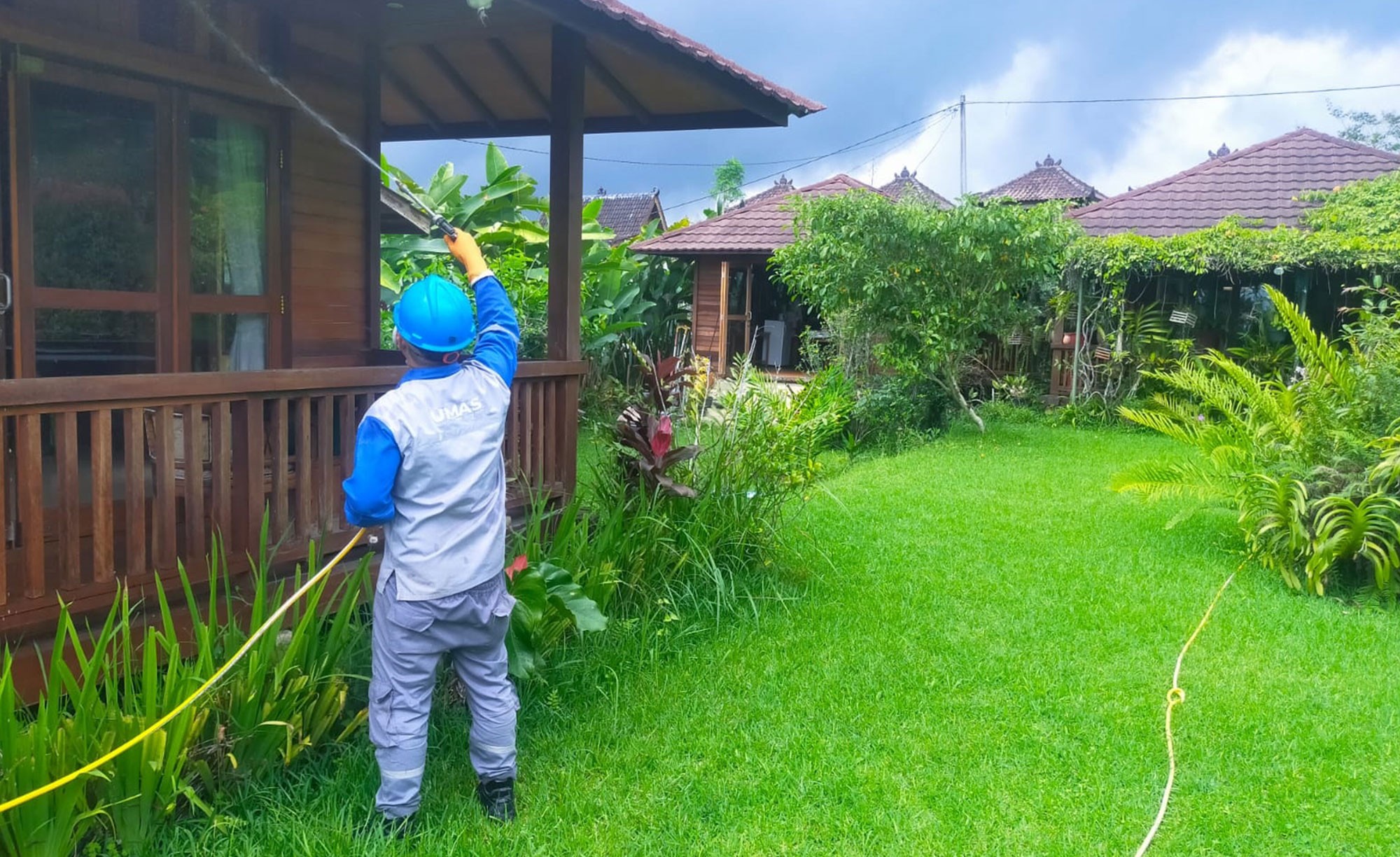
Above-Ground Baiting In Jakarta For Asian Subterraneans
Jakarta people consider that baiting for termites is the process of placing plastic stations in the garden and having them checked by a technician once every couple of months. The technician will inspect through the sand, then shake his head before proceeding. This isn't colony elimination, but perimeter monitoring. Above-ground baiting is an entirely different discipline entirely. The bait station won't be submerged. Instead it will be secured to an active mud tub or pressed up against the area that has been damaged. The bait isn't hidden as it is directly inserted into termites' daily commuting route. For Asian subterranean species--Coptotermes gestroi, Coptotermes curvignathus, Microtermes insperatus--above-ground delivery bypasses every behavioral barrier that makes perimeter baiting slow and uncertain. Jakarta anti-termite service vehicles that do not have above-ground stations are equipped to check, not treat.
1. Above-Ground Stations require active infestation
Perimeter baiting works on speculation; stations are installed and technicians wait for termites to discover them. Above-ground baiting can be confirmed. The station can only be put in place after mud tubes or damaged wood are identified. This isn't a restriction but rather an improvement in efficiency. No plastic will be buried under sterile soil. It is not necessary to devote the time of a technician observing stations that are never struck.
2. The Mud Tube as a Delivery Infrastructure
Stations above ground are constructed to blend into the existing structure of termites. The station base seals the mudtube's opening. Termites traveling between feeding sites and nests traverse the station, encounter the bait matrix, eat it and then continue their journey. The tube is not destroyed. The commuter route isn't disrupted. The colony contaminates its own infrastructure.
3. The testing for palatability is different when the delivery is above-ground
The colony is familiar with the smell of wood that has been destroyed. The feeding site is confirmed. Above-ground bait matrices need only to be acceptable. They do not have to be attractive. This eases the formulation restrictions and permits the inclusion of slower-acting toxicants that are not suitable for use if they compete with wood that is not treated. Jakarta exterminators should carry several bait formulations, and choose based on the feed preferences at the site of infestation.
4. Recruitment Multiplier with Self-Seeding
Moving live termites into the station's aboveground recruitment chamber will prompt immediate feeding. The termites that have been introduced to the natural environment are already accustomed to local foraging patterns and environmental conditions. They eat baits and recruit nestmates via trophallaxis. This one action can increase toxicant delivery velocity by approximately thirty percent. When exterminators kill termites that they scrape from damaged wood, they are destroying biological resources.
5. Coptotermes gestroi Responds Quickly to Above-Ground Placement
Coptotermes gestroi and the other Asian subterranean Termites maintain a high rate of foraging all through the entire year. Above-ground stations located on active infestations show the typical amount of food consumed within 48 hours, and the measurable consumption of bait in a week. The timelines for eliminating colonies are reduced from months to only several weeks. The services who quote the six-month timeframe for above-ground baiting employ suboptimal matrices and/or do not transfer the recruit termites.
6. Microterms and macroterms require different Position
Fungus-growing Termites (Microtermesinsperatus Macrotermesgilvus) However, they do construct extensive mud tubes differently as Coptotermes. Their foraging in the ground is more dispersed, and their feeding sites are usually hidden within the wood itself. To bait above ground it is essential to remove the damage area and then insert the mat directly into feeding cavities. Station geometry is different. Jakarta exterminators attempting Coptotermes protocols to combat Microtermes infestations could observe low uptake.
7. Moisture Conditioning Is Non-Negotiable
Above-ground bait matrices are made in specific water activity levels. Jakarta's relative humidity is responsible for the exchange of moisture. Bait that is left in a toolbox placed on an automobile for weeks dehydrates. Bait removed from sealed containers that are not kept in a safe place can absorb atmospheric moisture and cause spoilage. The exterminator must prepare the bait cartridges prior to installing them, by adding measured water to attain the best moisture content--and must protect unused bait from Jakarta's constant humidity.
8. Inspection Frequency Compresses
The inspection schedule for perimeter baiting is each quarter or every two years. Above-ground baiting occurs on a weekly cycle. The bait is consumed rapidly by active infestations; cartridges that are depleted must be replaced within days, not months. Colony elimination is confirmed when feeding stops, and the mud tube dehydrates. If services schedule above-ground checks in their routine monitoring of their perimeter, they'll observe bait depletion and conclude that treatment is in progress but will not observe the colony recovery period.
9. Different warranties require different Underwriting
The cost of a guarantee on perimeter baiting depends on the number of stations that are used and the frequency they are inspected. The cost of above ground guarantees is determined by species identification, size of infestation and structural complexity. A single Coptotermes gestroi colony crossing an entry point is warranted at the standard rate. Microtermes infestations that involve several colonies that spread across an entire floor of a building need a different risk assessment. Jakarta Anti-Termite Services which apply a uniform warranty price to both scenarios are mispricing the risk.
10. Above-Ground Is Diagnostic, Not Just Therapeutic
The location and the size of the mudtube, along with the termite caste ratio in the station provide valuable information on the health of the colony and its area of foraging. A rapid consumption rate indicates that the colony has a large demand for resources. Consumption that is followed by abandonment suggests possible colony elimination or possible bait avoidance. A darkened mud tube indicates less traffic. When trained to read the signals, pest control professionals can alter treatment parameters in real-time. Pesticides who exchange cartridges and then leave the area are not utilizing this most information-rich method of treatment for termites.
Conclusion
Above-ground detection of Asian subterraneans by inspection companies is not a supplementary service. This type of intervention is what separates colony removal specialists from inspection companies. Perimeter baiting monitors. Above-ground baiting provides pleasure Perimeter baiting is waiting to be discovered. Above-ground baiting engineers face challenges. Perimeter baiting results in quarterly service tickets. Above-ground baiting leads to colony elimination, and warranties are renewed based on confirmed the effectiveness. Jakarta anti-termite service providers that delay the adoption of above-ground strategies typically blame equipment costs, technician training requirements, or the hassle of carrying several baitmatrices. These aren't obstacles but rather investment. For the three initial deployments above ground, the equipment expenses are recouped. Training investment can pay retention dividends as technicians transition from generalist technicians to diagnosticians. Multi-bait matrices are a way to distinguish between premium exterminators and commodity exterminators. If a homeowner has an active termite issue doesn't need to watch the perimeter. They do not want to see the termite colony still alive. Above-ground trapping is the most direct method of getting there. Jakarta exterminators spend their time scraping tubes, and then injecting dirt, but they do not have any above-ground stations. Take a look at the recommended anti rayap jakarta for more info including jasa rayap, jasa pembasmi hama, jasa pest control, pembasmi rayap kayu, pintu anti rayap, jasa rayap, jasa anti rayap jakarta, bahan lemari anti rayap, pembasmi rayap kayu, kayu tahan rayap and more.